The Title Sequence
Before the first film, a signature. The mark that opens everything Future Vintage will ever produce — photographed, not drawn; lit in a real room on a real night, and caught on 35 millimetre the way anything worth keeping is caught.
A signature,
not a graphic.
Most title sequences are built inside a computer. Ours could not be. A company that shoots on film cannot announce itself in pixels — the first thing an audience sees has to mean what the work means.
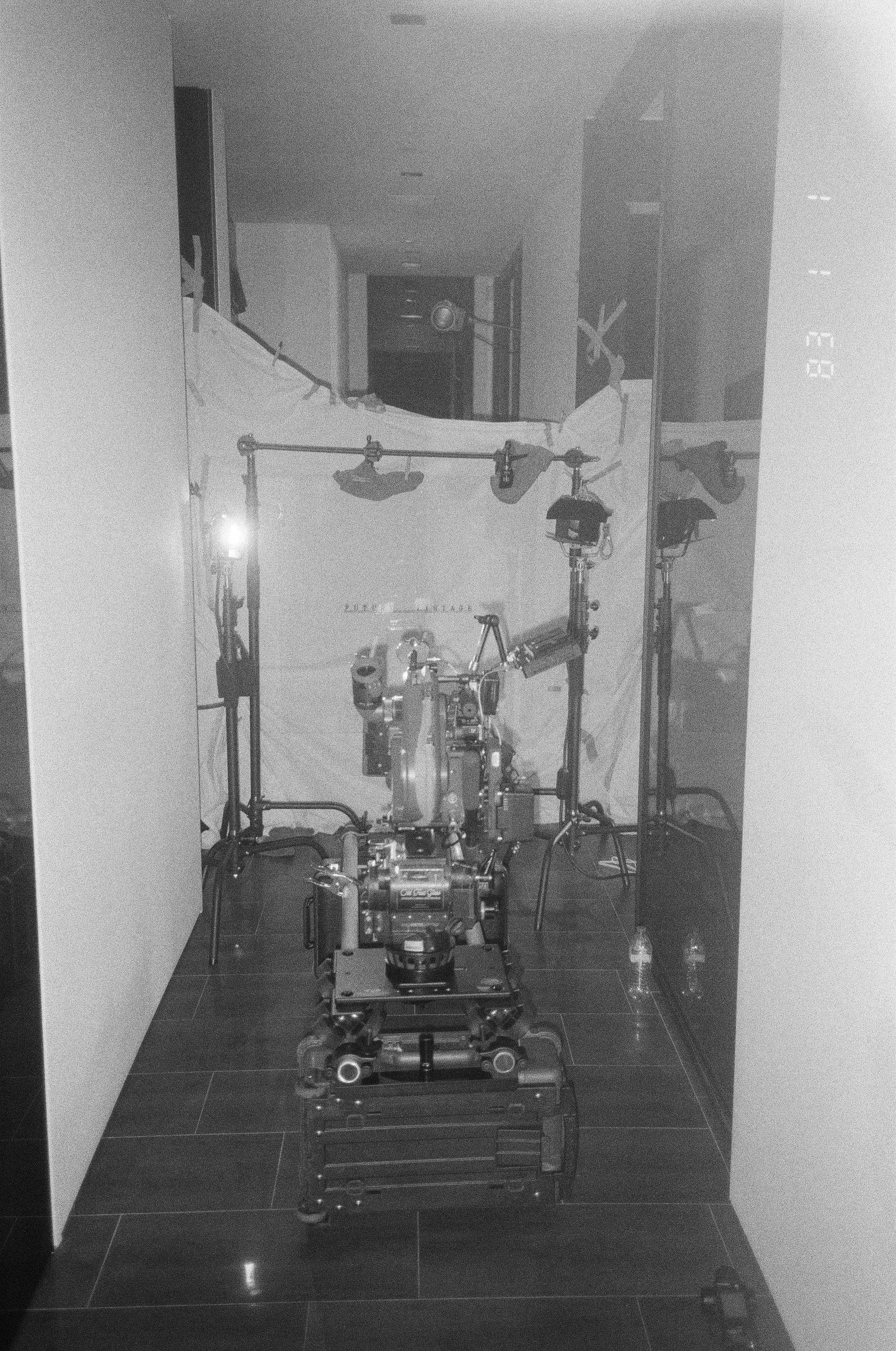
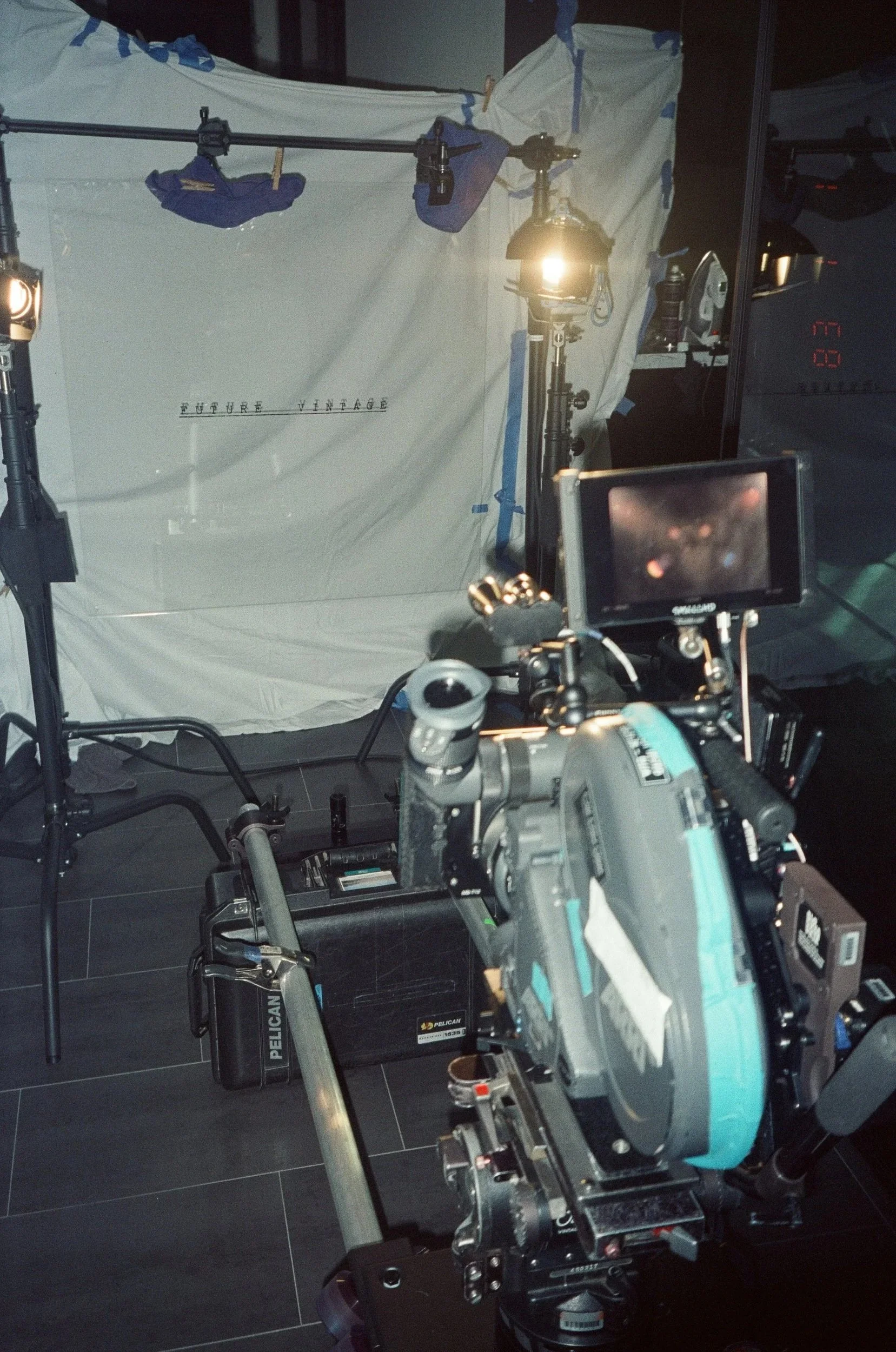
So we treated the mark like a subject. We hung a cloth, raised the letters into the light, and handed them to the same instrument we would hand an actor: a film camera, loaded with stock, running at twenty-four frames a second.
What you see at the head of our films is not a render. It is twenty-four frames a second of something that was actually there.
Typed, not designed.
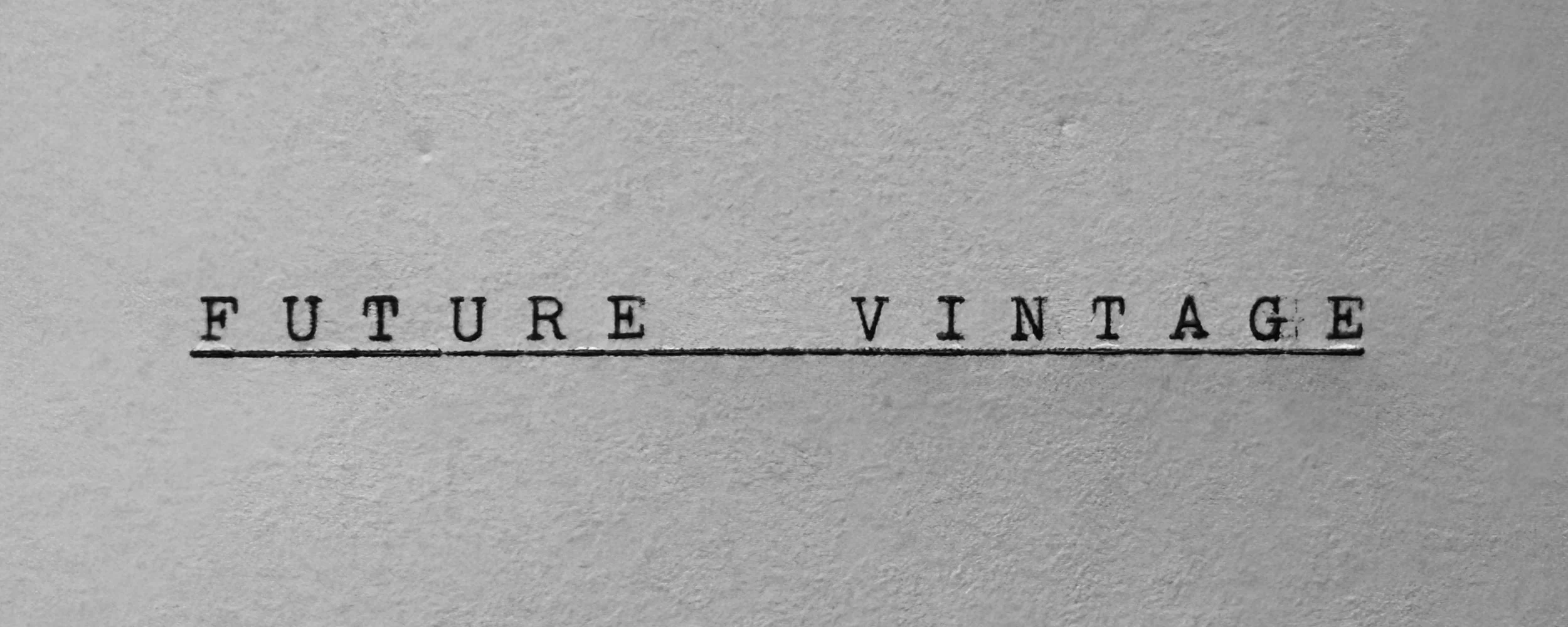
The mark began on a keyboard, not a screen. Eze typed it on his 1922 Smith Corona Standard — a machine older than sound film, its keys worn smooth by a hundred years of other people's words. Future Vintage, struck once into paper by the weight of a hand.
We traced that impression into a vector — keeping every irregularity the typewriter left behind — and had it printed onto a sheet of plexiglass. That panel is what we hung, what we lit, and what we filmed. The letterforms you see at the head of our pictures still carry the unevenness of a single keystroke, now caught on 35mm.
“We do not use these tools out of nostalgia. We use them out of conviction.”
Future Vintage — On Craft
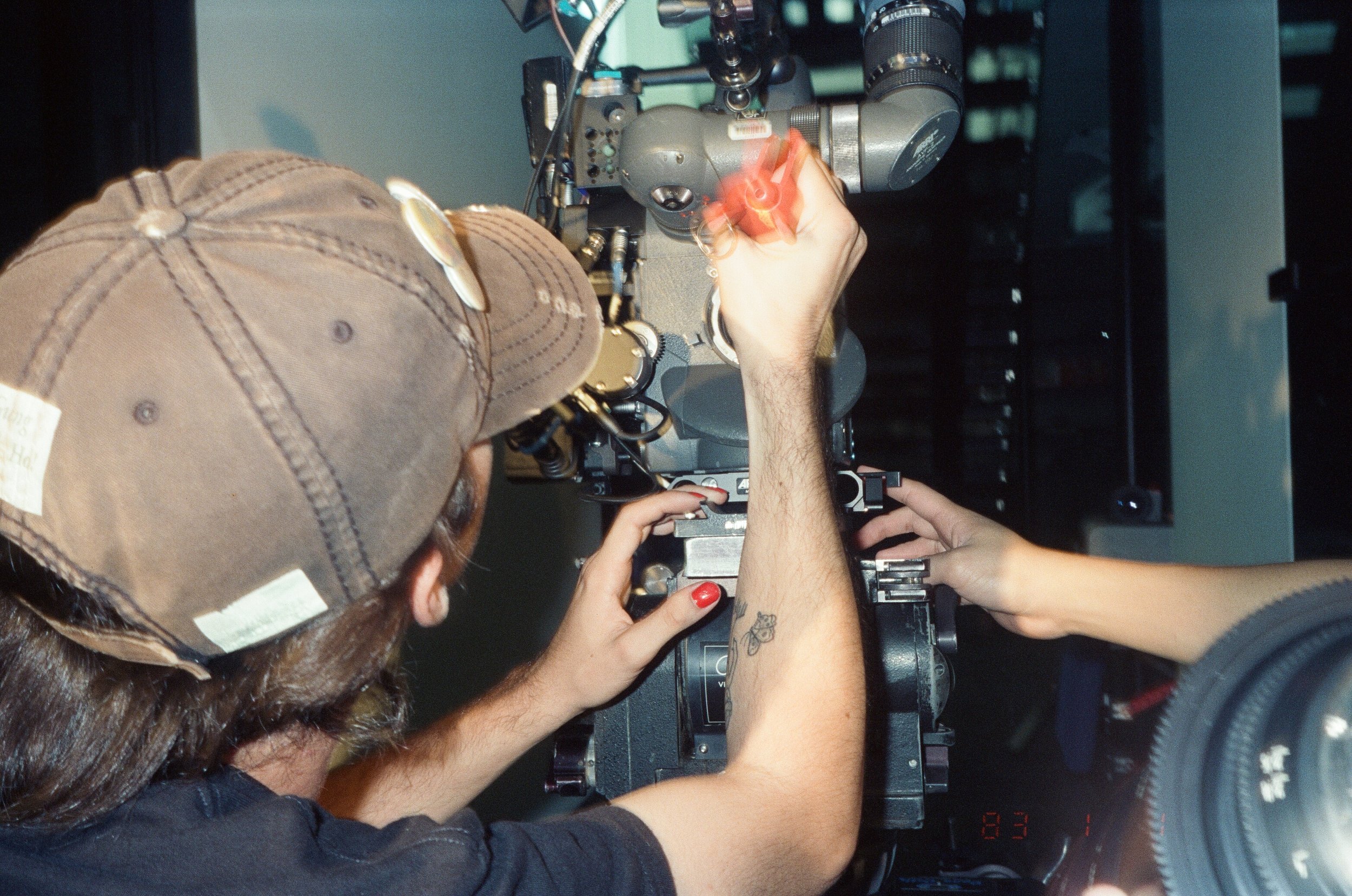
An ARRIFLEX 435, and glass older than all of us.
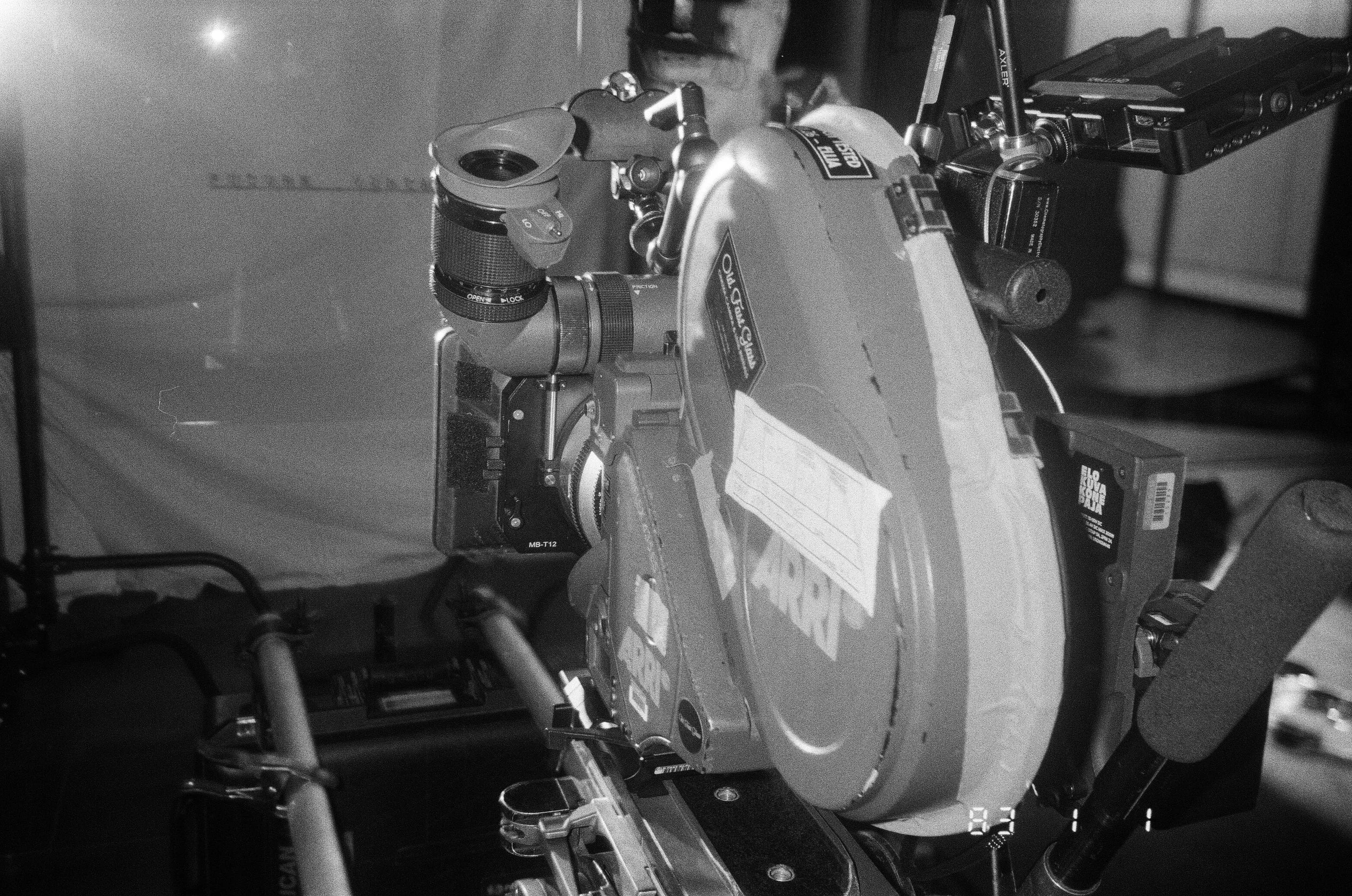
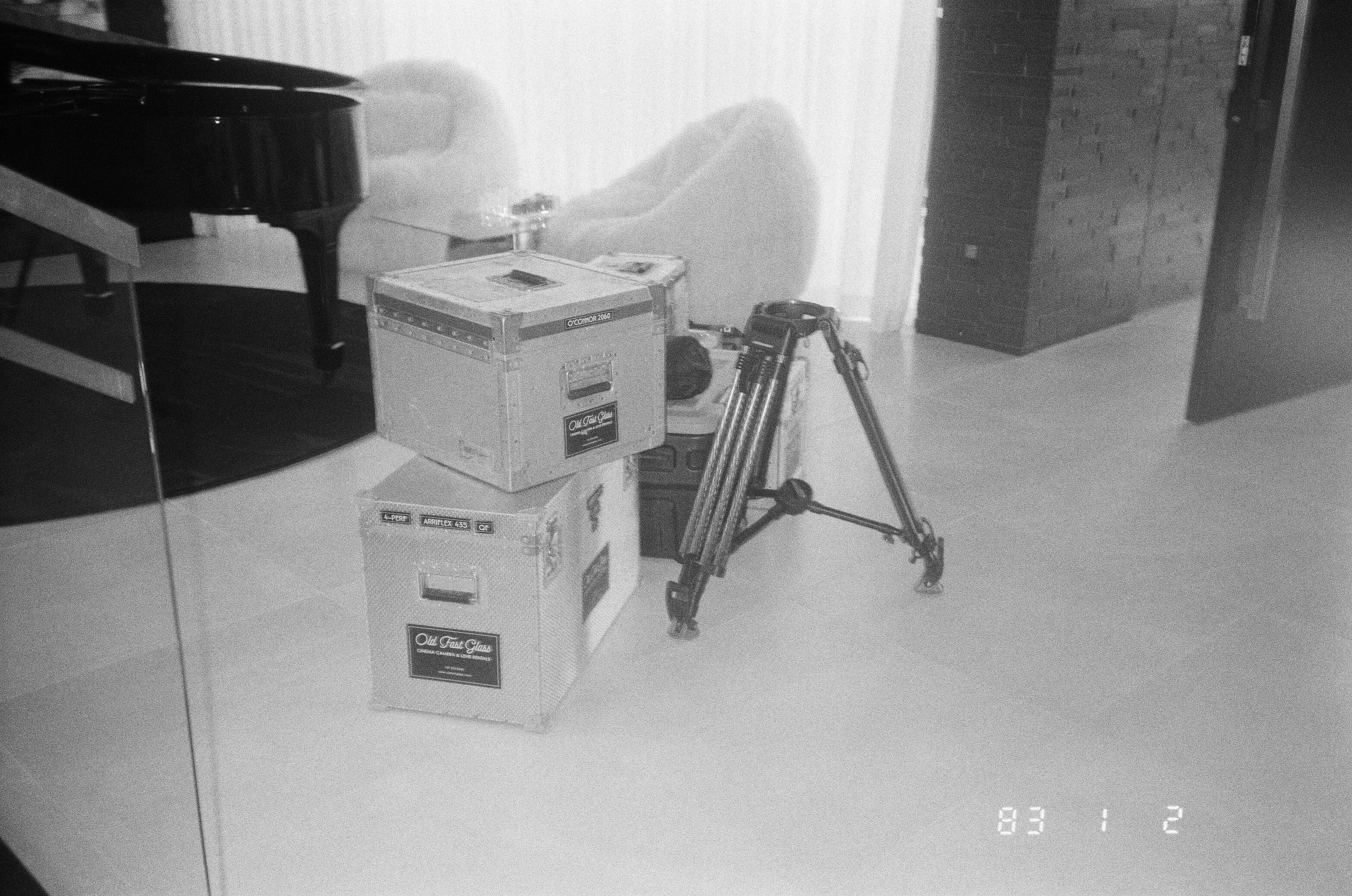
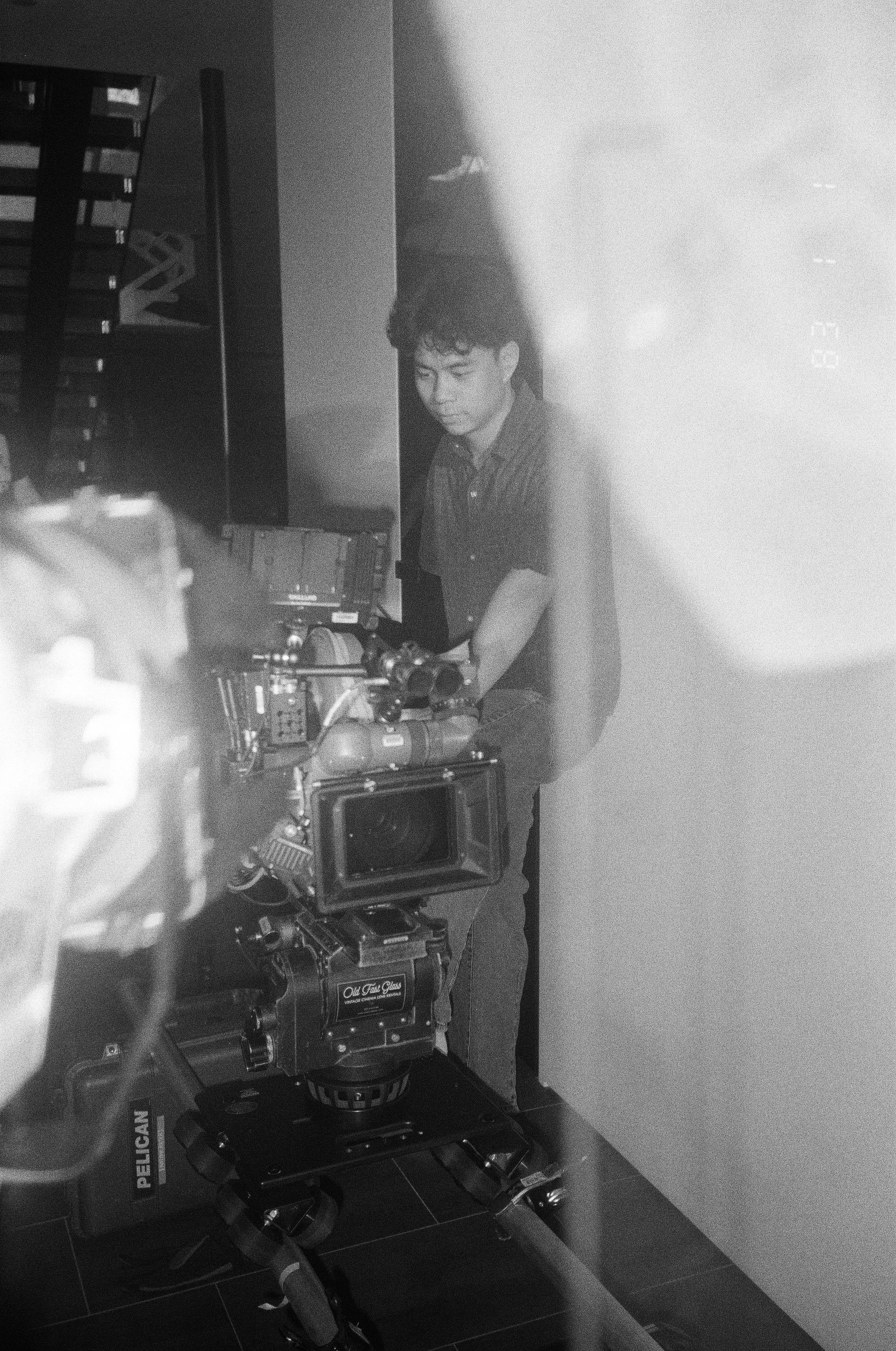
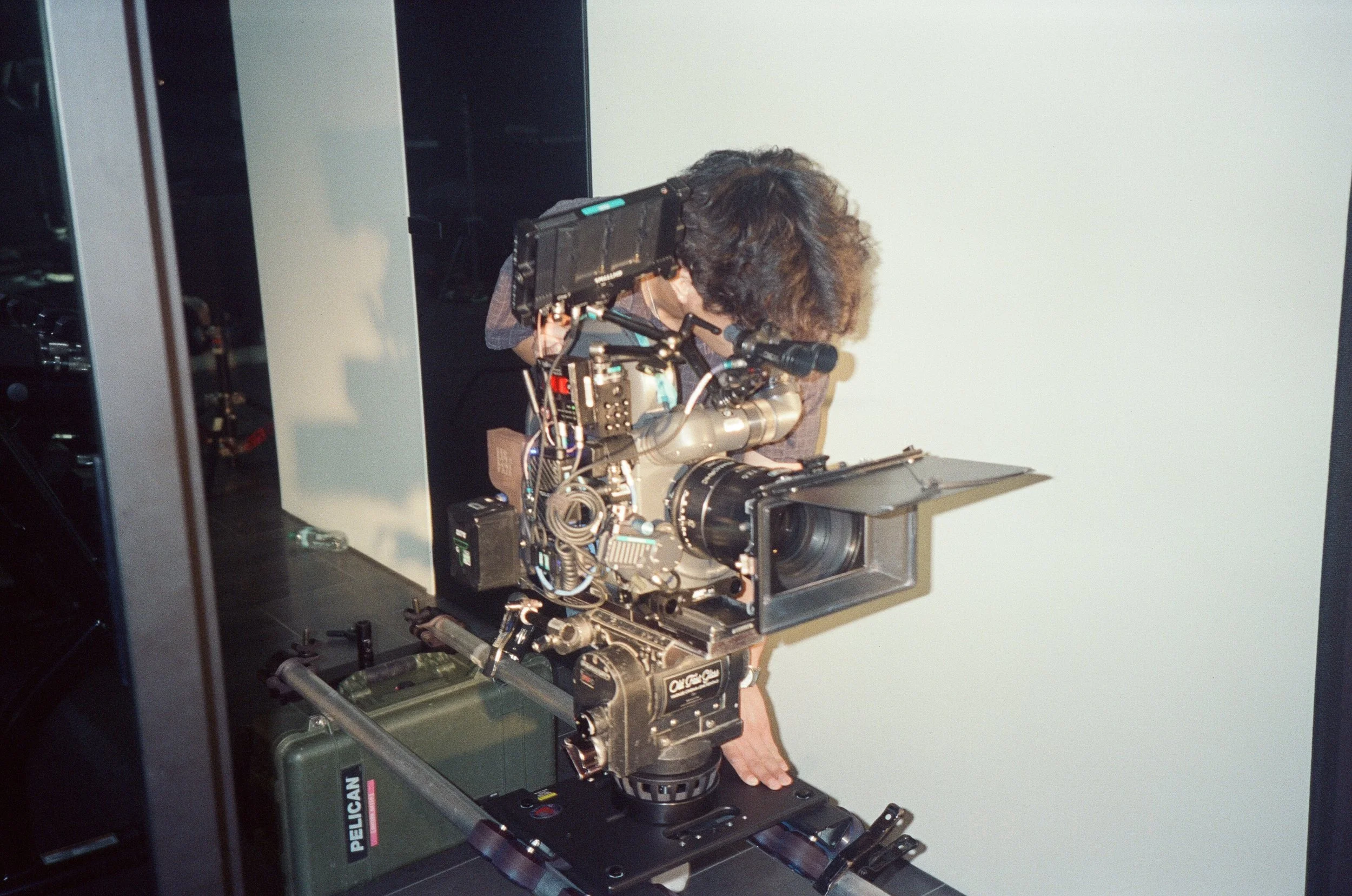
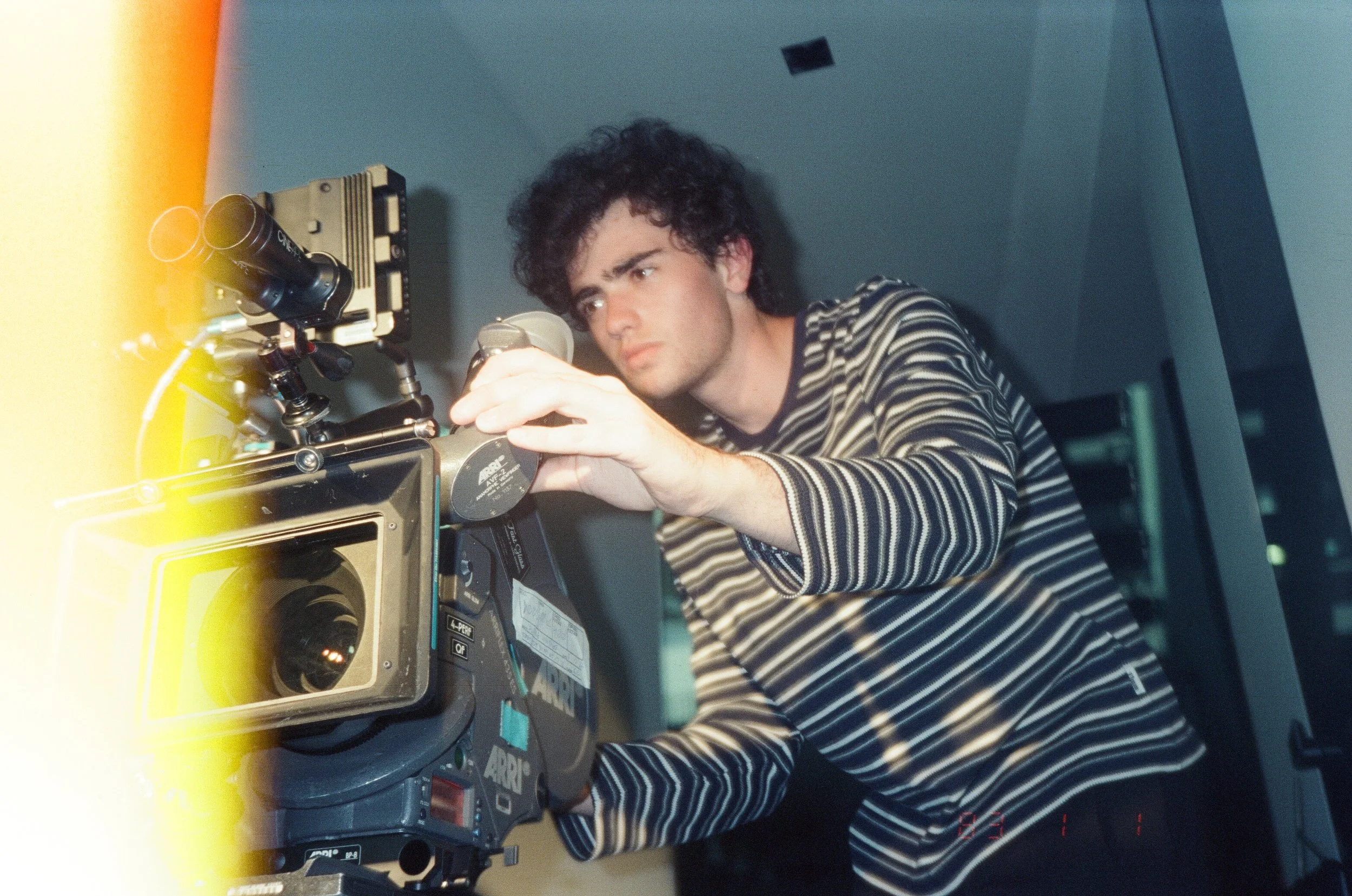
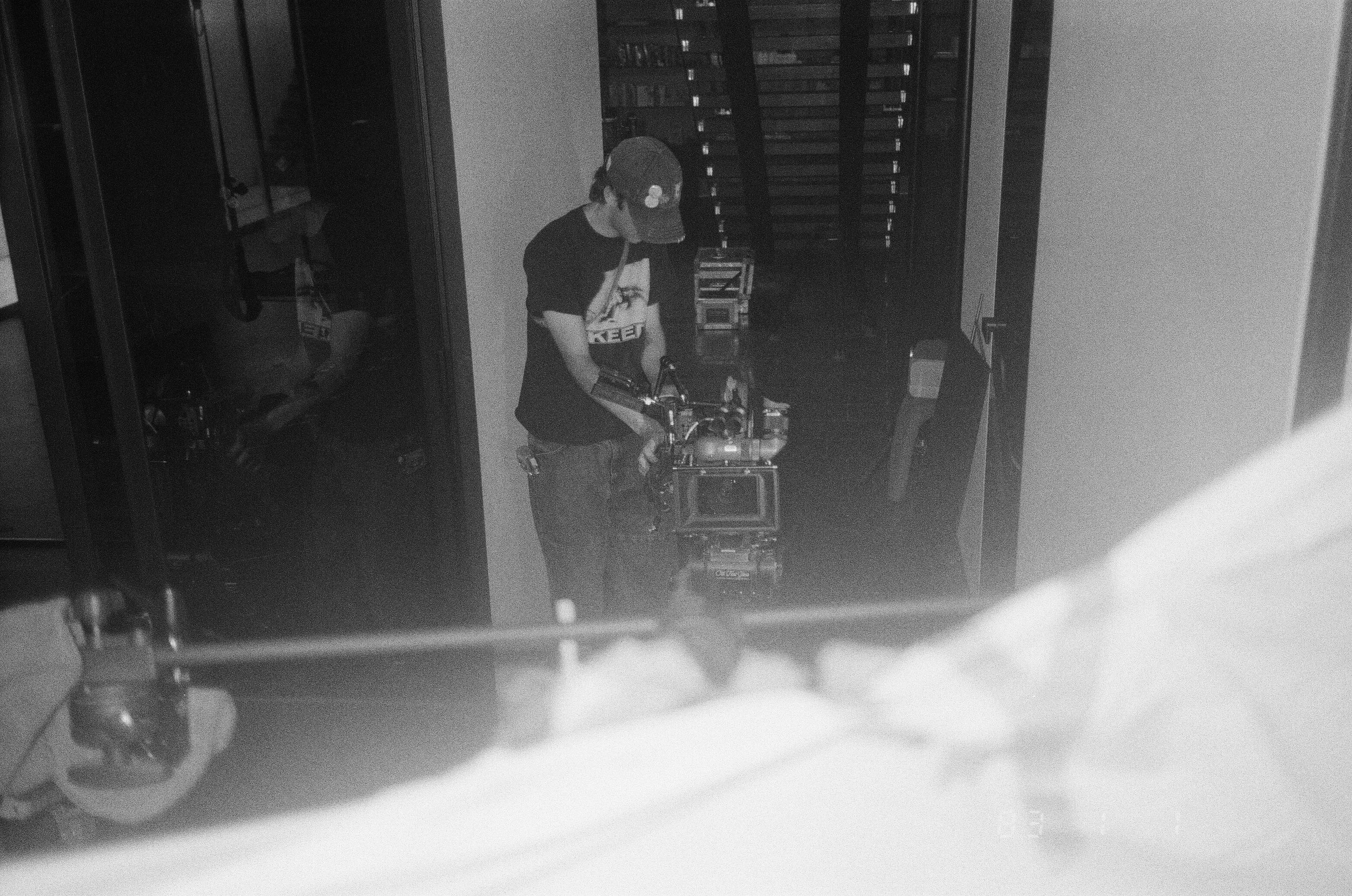
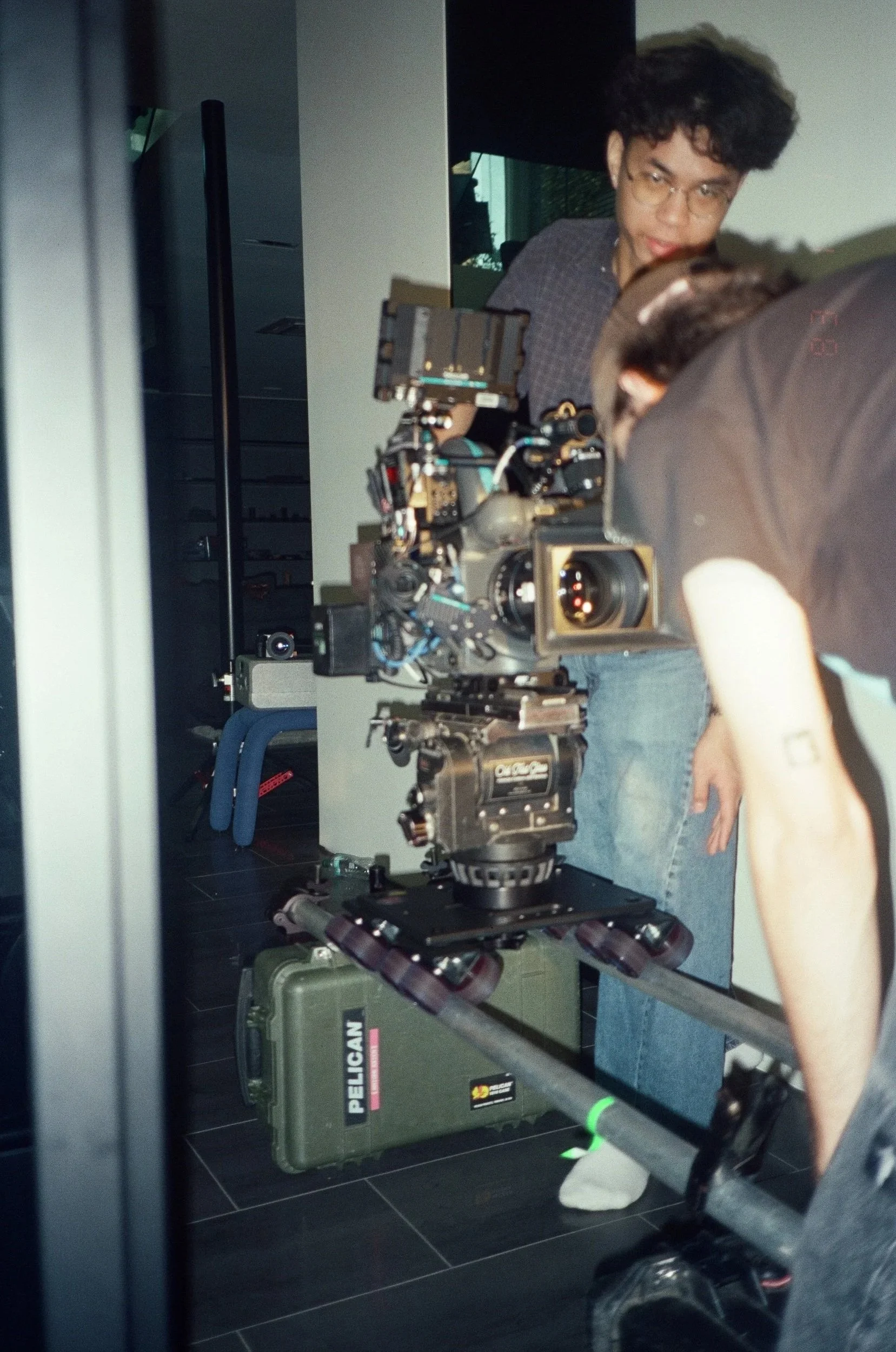
The 435 is a 35mm motion picture camera built for precision — the same body that has photographed main titles for decades. We loaded it with Kodak 500T behind a 75mm Lomo 2x Round-Front Anamorphic — Soviet-era cinema glass, provided by Old Fast Glass, a rental house here in Los Angeles.
The entire sequence was shot on the 75mm at a T11. It is glass with a memory — oval highlights, a soft falloff toward the edges, warm where it counts and never clinical.
- Format
- 35mm · 4-Perf
- Stock
- Kodak 500T
- Camera
- ARRIFLEX 435
- Lenses
- Lomo 2x Round-Front Anamorphic
- Key Lens
- 75mm at T11
- Rentals
- Old Fast Glass
- Head
- O'Connor 2060
- Location
- Los Angeles
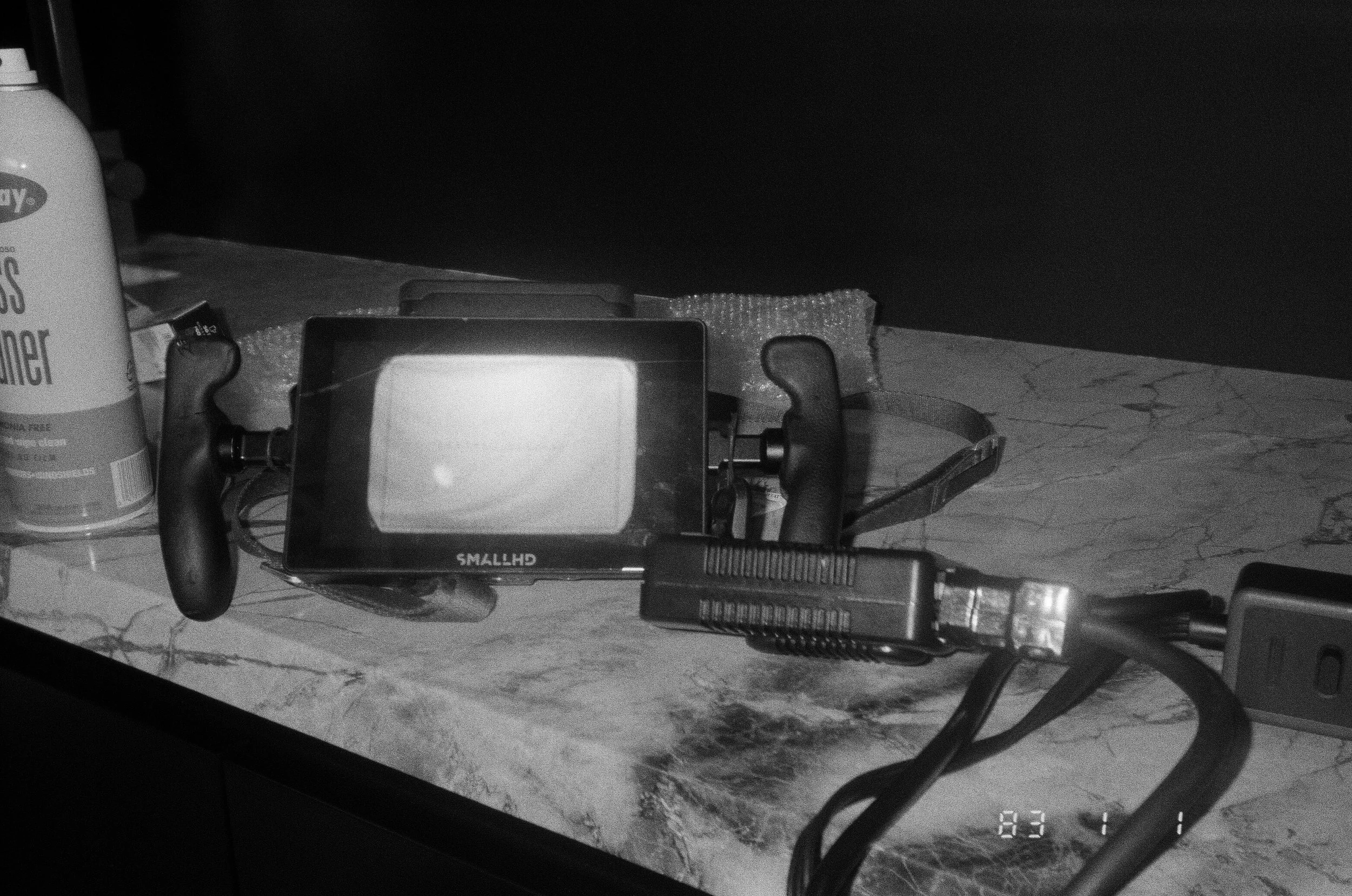
Real light,
real room.
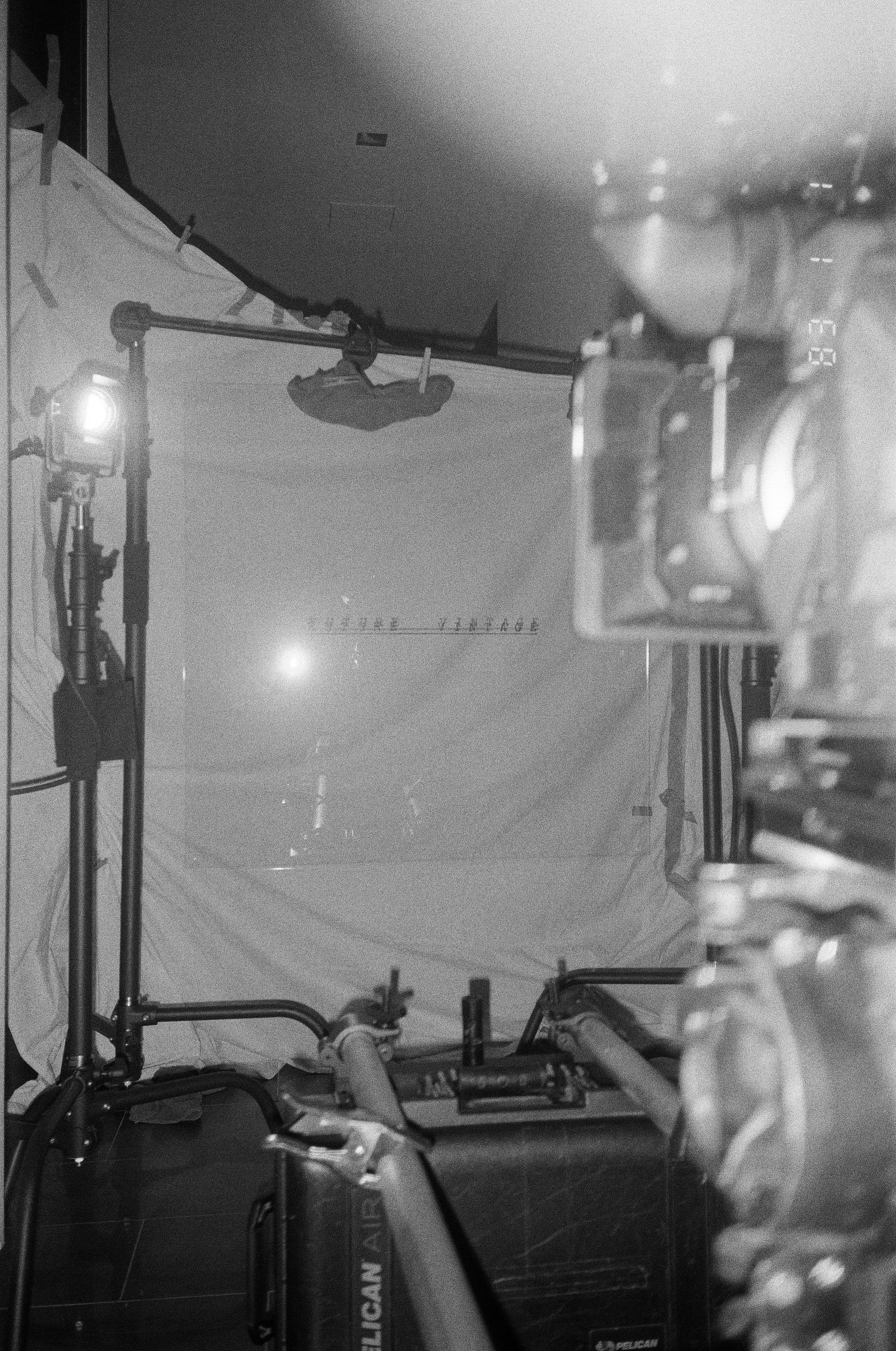
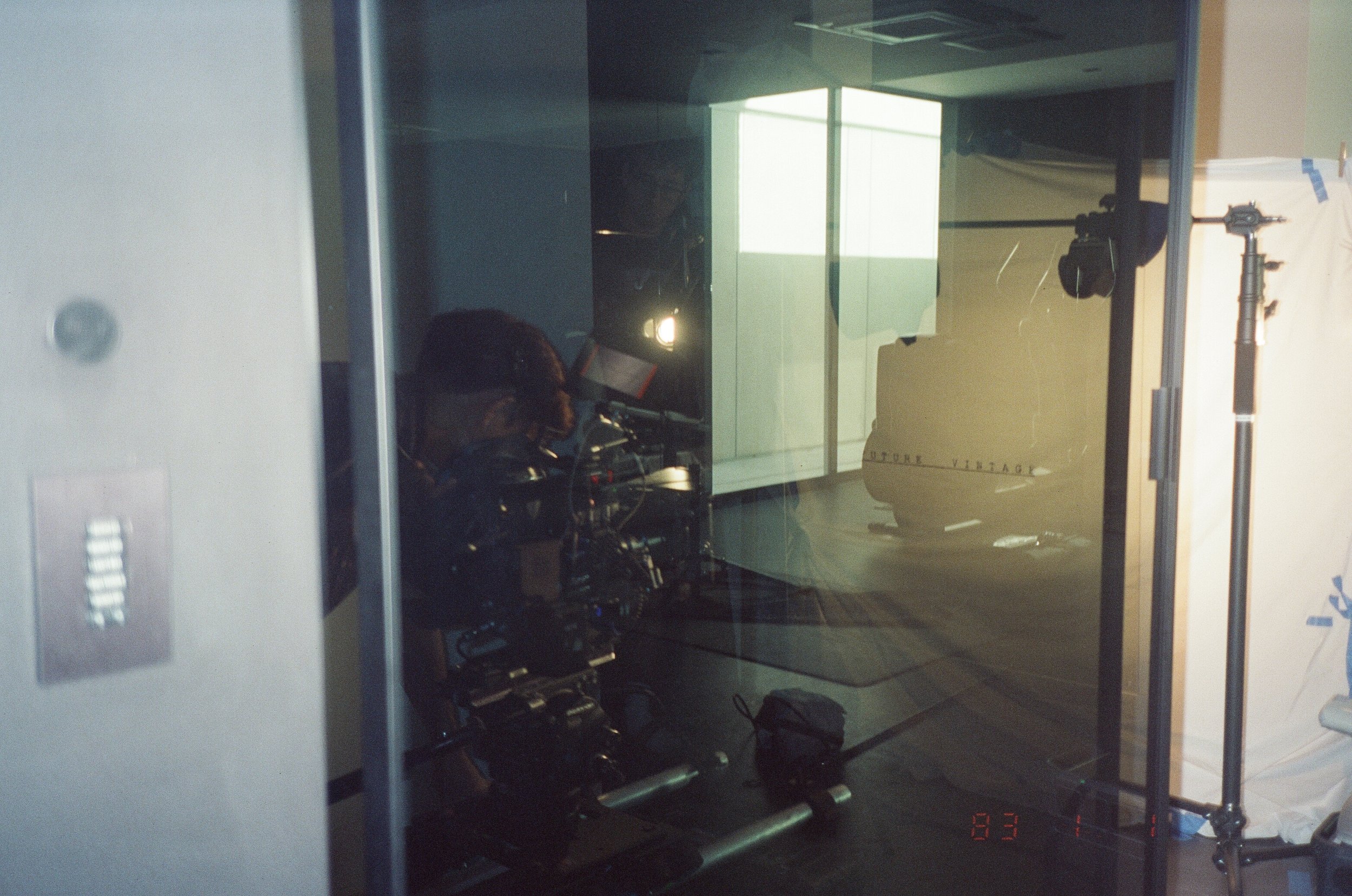
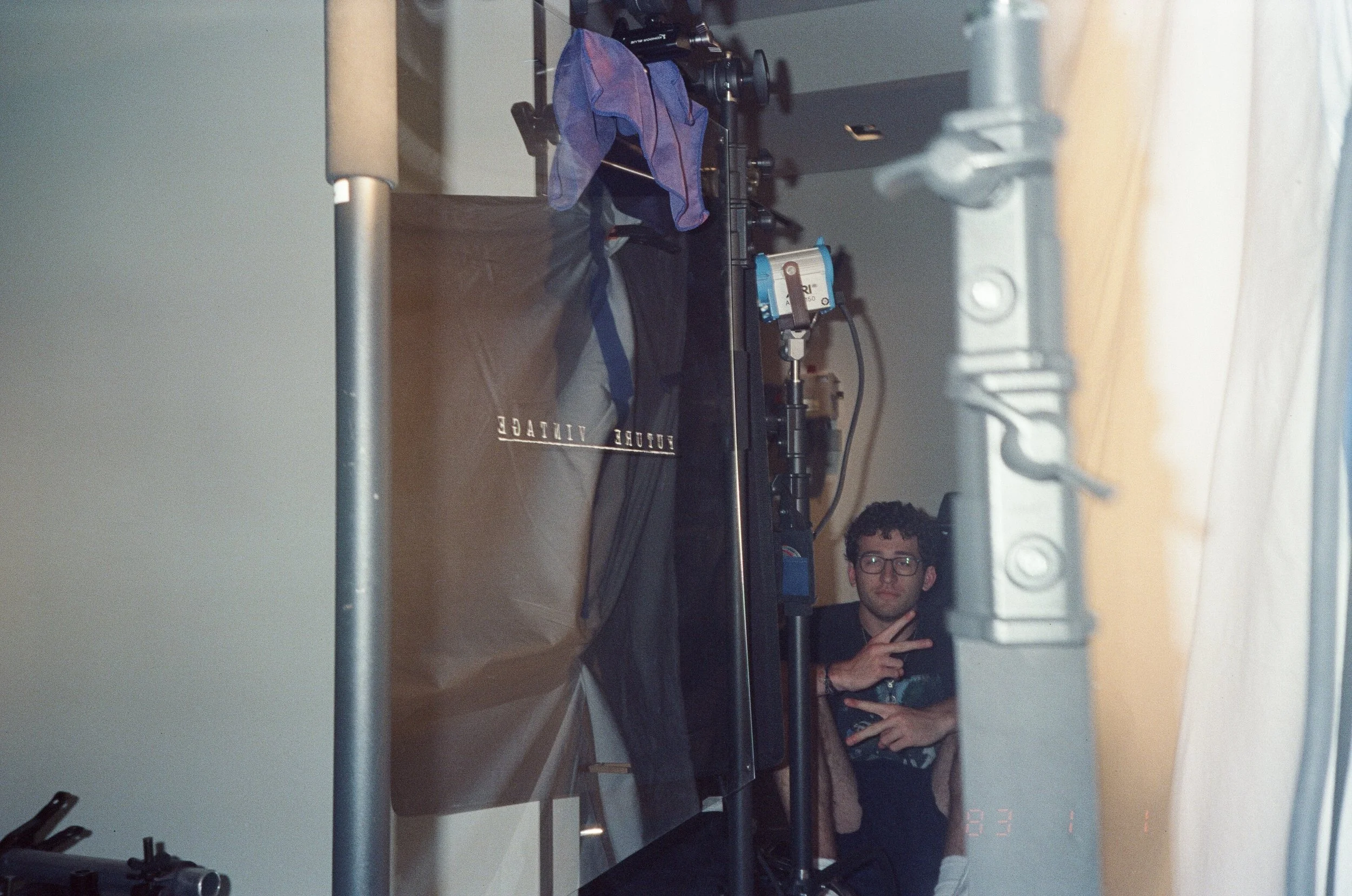
It took a hallway, more tungsten than the moment seems to need, and a backdrop that was really just a bedsheet — one we steamed flat by hand until the creases gave way. Hung and lit, it stopped looking like laundry and started looking like the screen at the back of an old living room, the kind a home projector throws its first frame onto.
We flagged the spill and chased the one position where the letters caught and held — the plexiglass mark glowing a few feet in front of the steamed cloth.
Made by hand.
Film is the last medium that still requires a roomful of people to agree. Someone pulls focus, someone holds the slate, someone watches the gate. Nothing here happened by accident, and nothing happened alone.
The Sequence.
A few seconds of film, and the months of conviction behind them. This is what opens every Future Vintage picture.
Shot on film. Made with care.